Cyberattacks are more sophisticated than ever, and artificial intelligence (AI) is being weaponized by bad actors. Zero Trust Security is no longer optional; it’s essential.
Gone are the days when a solid firewall and antivirus software were enough to protect your business. Today’s cyber threats are stealthy, relentless, and increasingly automated. And if your IT environment still operates on the outdated belief that everything “inside the network” is safe, your business is already at risk.
In this article, Succurri experts will explain what Zero Trust Security is, why it matters now more than ever, and how you can begin implementing it across your organization, regardless of size or industry.




What Is Zero Trust Security?
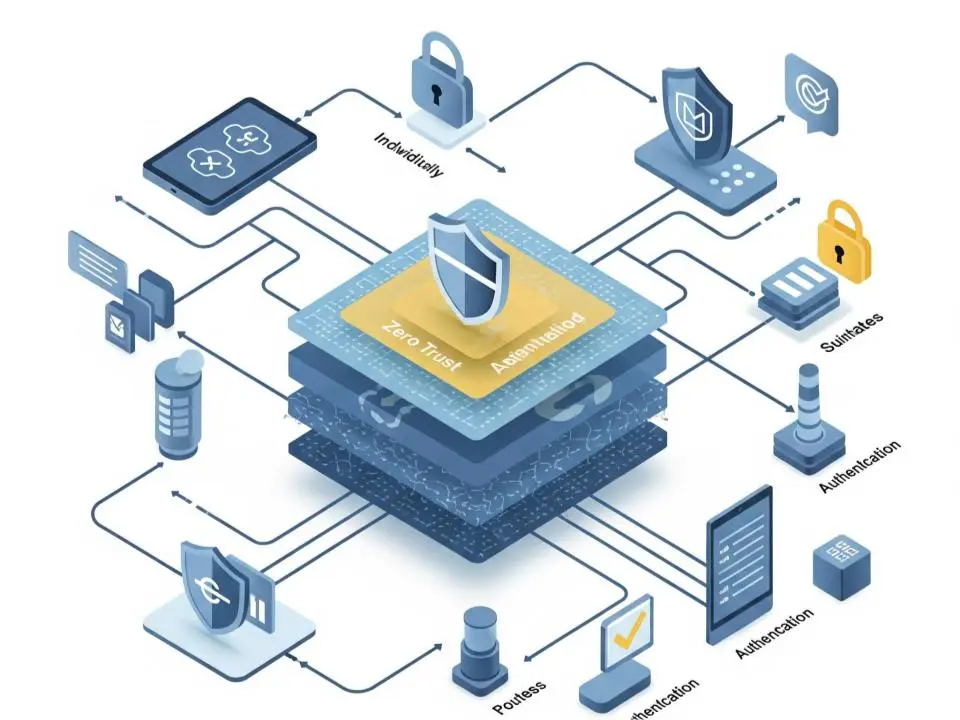
The zero trust security model is a cybersecurity framework that assumes no user, device, or application, inside or outside your network, can be automatically trusted. Instead of a “trust but verify” model, zero trust security principles flip the approach to “never trust, always verify.” That means every request to access a system, application, or data source must be authenticated, authorized, and continuously validated, regardless of where it originates. Zero Trust is not a single product; it’s a strategy that includes:- Strong identity and access management (IAM)
- Multi-factor authentication (MFA)
- Continuous device monitoring
- Network segmentation
- Least-privilege access controls
- Endpoint security
- Real-time analytics and behavior monitoring
Why Zero Trust Matters More Than Ever
Cybersecurity used to focus on perimeter defense, think firewalls, VPNs, and malware detection. But that perimeter no longer exists. Cloud apps, hybrid workforces, mobile devices, and third-party vendors have erased traditional boundaries. To make matters worse, AI is now in the hands of cybercriminals. Attackers are using large language models (LLMs), automation, and deepfake tools to:- Craft highly convincing phishing emails
- Probe for vulnerabilities at scale
- Evade traditional detection systems
- Launch faster and more sophisticated attacks
Key Principles of Zero Trust Security
Implementing zero trust network security doesn’t happen overnight. But understanding the core principles helps set the stage:1. Verify Explicitly
Authenticate and authorize every access request based on multiple data points like user identity, location, device health, and behavior.2. Use Least Privilege Access
Give users the minimum level of access they need—and nothing more. Limit lateral movement in your network.3. Assume Breach
Design your environment assuming bad actors are already inside. This encourages isolation, constant monitoring, and rapid incident response.4. Enforce Strong Identity Controls
Zero Trust security starts with knowing who and what is trying to access your systems. MFA, single sign-on (SSO), and conditional access policies are a must.5. Monitor and Analyze Everything
User behavior analytics and real-time threat detection give you the insights needed to spot abnormal activity before it escalates.
How Zero Trust Improves Security Posture
Here’s what businesses gain when implementing zero trust cyber security:- Reduced attack surface: Segmenting networks and limiting access prevent attackers from moving freely once inside.
- Improved compliance: Zero Trust aligns with HIPAA, PCI DSS, NIST 800-207, and other frameworks.
- Better visibility: Monitoring and logging every request helps detect and investigate threats faster.
- Stronger remote work protections: Zero Trust assumes remote devices are untrusted by default, enforcing policy at every access point.
- Insurance readiness: Many Cybersecurity Insurance providers are now requiring Zero Trust or similar frameworks for coverage.
Signs Your Business Needs Zero Trust Now
If you’re wondering whether your organization needs a Zero Trust approach, consider these red flags:- Users share credentials or use weak passwords
- Remote workers access systems via an open VPN
- You rely on perimeter firewalls and antivirus as primary defense
- You lack MFA or role-based access controls
- You have little visibility into user behavior or access logs
- You’re storing sensitive customer data without segmentation
Succurri’s Approach to Zero Trust Security
At Succurri, we help businesses design and implement a custom Zero Trust architecture that fits their team, industry, and growth stage. This includes:- Identity and access management strategy
- Network and endpoint segmentation
- Next-gen antivirus and behavior monitoring
- Security policy development
- Employee security training
- Ongoing reviews and incident response planning
Real-World Use Case: Succurri Helps SMB Transition to Zero Trust
One client, a regional healthcare provider, came to Succurri after experiencing a credential stuffing attack. Their VPN had no MFA, and shared admin accounts were used by IT staff. Our team:- Audited the environment
- Segmented their network into patient data, operations, and public zones
- Replaced the VPN with an identity-based access solution
- Deployed MFA organization-wide
- Trained their staff through our IT Security Awareness Webinar
How to Get Started with Zero Trust
You don’t need to tackle everything at once. Here’s a realistic 5-step roadmap:Step 1: Assess Your Environment
Conduct a security audit to understand where your gaps are. Get a Free AuditStep 2: Deploy MFA Across All Systems
Start with email, cloud apps, and remote access systems.Step 3: Segment Your Network
Break up flat networks so one compromised endpoint doesn’t bring down your business.Step 4: Implement Least Privilege Access
Clean up user permissions and reduce admin rights.Step 5: Train Your Team
Even the best tools can’t protect you from human error. View our Webinar on IT Security Training for EmployeesFrequently Asked Questions (FAQ)
Is Zero Trust only for big companies?
Not at all. SMBs are increasingly being targeted because they lack mature defenses. Zero-trust data security can (and should) be implemented by businesses of all sizes.Does Zero Trust replace my existing cybersecurity tools?
No—zero trust security solutions leverage and enhance what you already have. It’s about how those tools are used, integrated, and governed.Is Zero Trust expensive to implement?
It doesn’t have to be. Many foundational Zero Trust tools—like MFA, endpoint segmentation, and user training—are low-cost or already available through your existing systems.Can Succurri help us implement Zero Trust?
Yes! We’ve helped companies across construction, healthcare, legal, and service industries implement scalable, secure, and compliance-aligned Zero Trust strategies. Contact Us to learn more.